The market is now huge: from simple DIY boxes to high-end upgrades, everything is available. But before you compare the providers, you need to make a basic decision: Do you want a compact camping box (everything in a heavy housing) or a flexible modular system (individual, combinable elements)?
The philosophy of the manufacturers differs massively: some focus on maximum robustness and fixed installation, while we at VANFITTERY, for example, focus on minimum weight and full modularity. Click through the comparisons to find out which system - whether rigid „block“ or flexible „modular principle“ - really suits your everyday life.
Here you will find manufacturers that have been around for a long time and are known for their extremely high quality workmanship. In the end, you will notice this in the price and often also in the weight, but these speakers usually last a very long time.
If you don't feel like lugging around heavy boxes or are looking for a system that you can expand flexibly, these providers are exciting:
Some concepts go their own way - be it through the choice of materials or by replacing almost the entire interior.
There are many other concepts that can be perfect depending on the vehicle size and requirements.
My tip: First think about how often you really need to install and remove the box. If it stays in the car 365 days a year, go for a heavier premium system. If you have to carry it into the cellar after every weekend, take a look at our Products to.
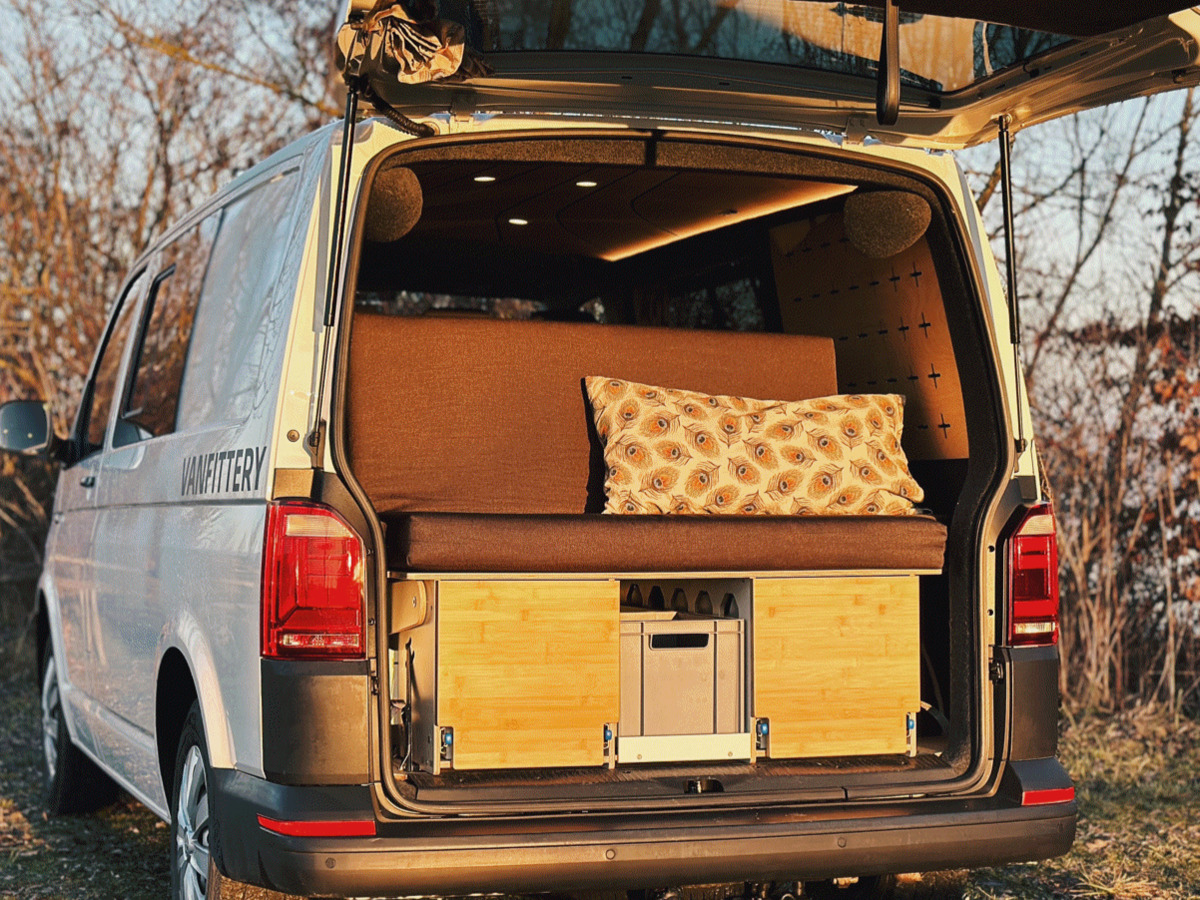
Hand on heart: a real motorhome is expensive, bulky and just stands around most of the time. This is exactly where the camping box comes into play. But it's not the perfect solution for everyone.
If you need your car during the week to take the kids to school or do the shopping, a fixed camping conversion often gets in the way. With a box, you can transform your high-roof estate car (such as a Caddy or Berlingo) or your bus from a weekly shopping van into sleeping quarters in ten minutes. On Sunday evening, the thing comes out again and the back seat is free again.
You decide on Friday afternoon over your second coffee that you want to go to the sea or the mountains? With a box, you don't have to do much packing. The cooker, water and bed are usually already stowed in the box ready to go. Load up, set off and you're ready to go.
Today, a VW California or a Mercedes Marco Polo often costs as much as a small condominium. A camping box offers you 80 % of utility for a fraction of the price. If you prefer to live outside anyway and only use the car for sleeping and cooking, that's more than enough.
That's an important point: you live in a car with a camping box. around the car, not in it. You usually cook at the tailgate and stay outside. So if you want to sit in the car and play cards even in three days of constant rain, it quickly becomes very cramped and uncomfortable in a minicamper with a box.
This is one of the most frequently asked questions: „Do I have to have this thing registered with the TÜV?“ The short answer for 95 % of all camping boxes is: No.
Why this is the case is due to the legal categorisation. In Germany (and most neighbouring countries), a distinction is made as to whether something is permanently attached to the vehicle or is only carried as „cargo“.
Your camping box is legally considered a load if it can be removed with „on-board tools“ or completely without tools (e.g. with lashing straps on the lashing eyes or with wing bolts). So as long as you can theoretically lift the box out in a few minutes, your car officially remains a normal car or lorry.
This has two huge advantages for you:
It only becomes critical if you bolt or weld the box firmly to the bodywork so that it can no longer be easily removed. At that point, the inspector could say: „Wait a minute, this is now a motorhome.“ This then entails a whole raft of regulations (e.g. gas test, splinter protection of materials, etc.).

Just because the box is legally „cargo“, you are not allowed to simply place it loosely in the back. As the driver, you are responsible for ensuring that the box stays exactly where it belongs, even in the event of emergency braking or an evasive manoeuvre.
This is how you do it right:
If you are unsure, ask your insurance company whether camping equipment in the boot is covered in the event of an accident. Loose cargo„ is often included up to a certain amount, but better safe than sorry.
When you look at camping boxes, you quickly realise that prices vary enormously. This is usually due to the material. Technical terms are often thrown around here, but it's actually quite simple.
Most boxes are made of multiplex. These are several layers of wood that are glued together crosswise. This makes them extremely stable. But not all wood is the same:
Important for wood: Make sure that the wood is coated (e.g. with CPL or HPL). Untreated wood absorbs moisture like a sponge - and you will always have condensation in the car due to sleeping. Without a coating, it will eventually start to rot or warp.
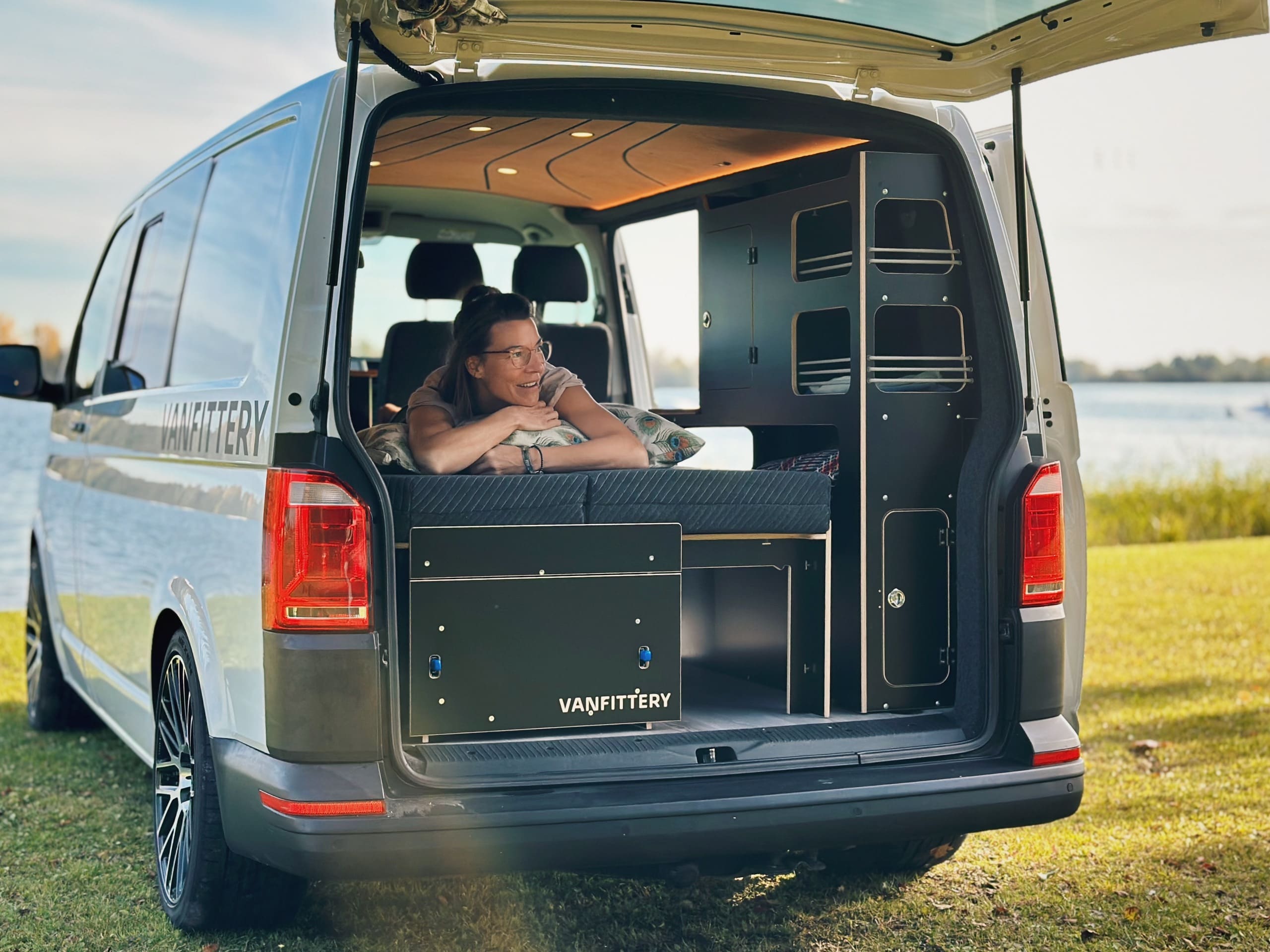
Aluminium systems are often more expensive. They are usually lighter than birch multiplex, but still extremely stable.
There are also systems that are made entirely from plastic panels or based on normal Euroboxes.
When you buy a camping box, the first thing you probably think about is the pack size or the lying surface. But the weight is just as important. It's not just about whether you can lift the box into the boot on your own, but also about how your car drives afterwards.
A solid multiplex camping box often weighs between 40 and 70 kilograms when empty. That doesn't sound like much at first - it's like having an extra passenger. But the box doesn't stay empty. Let's do a quick calculation:
Bang, you suddenly have over 100 kilograms permanently on the rear axle. And that's not even including your travelling bags, camping chairs and yourself.
A heavy rear changes the handling of your car massively. Here are the points you should have on your radar:
Before you strike, be sure to check your vehicle registration document under Point G (empty mass) and Point F.1 (Permissible total weight). The difference is your payload. With a full car with five people and a heavy camping box in the rear, you can reach the legal limit surprisingly quickly. Overloading can be expensive in the event of an inspection and is really problematic for insurance cover in the event of an accident.
Honestly, if you wake up with back pain after the first night, even the best road trip is no fun. The sleeping area is the centrepiece of your camping box. This is where the wheat is often separated from the chaff - especially when it comes to ventilation.
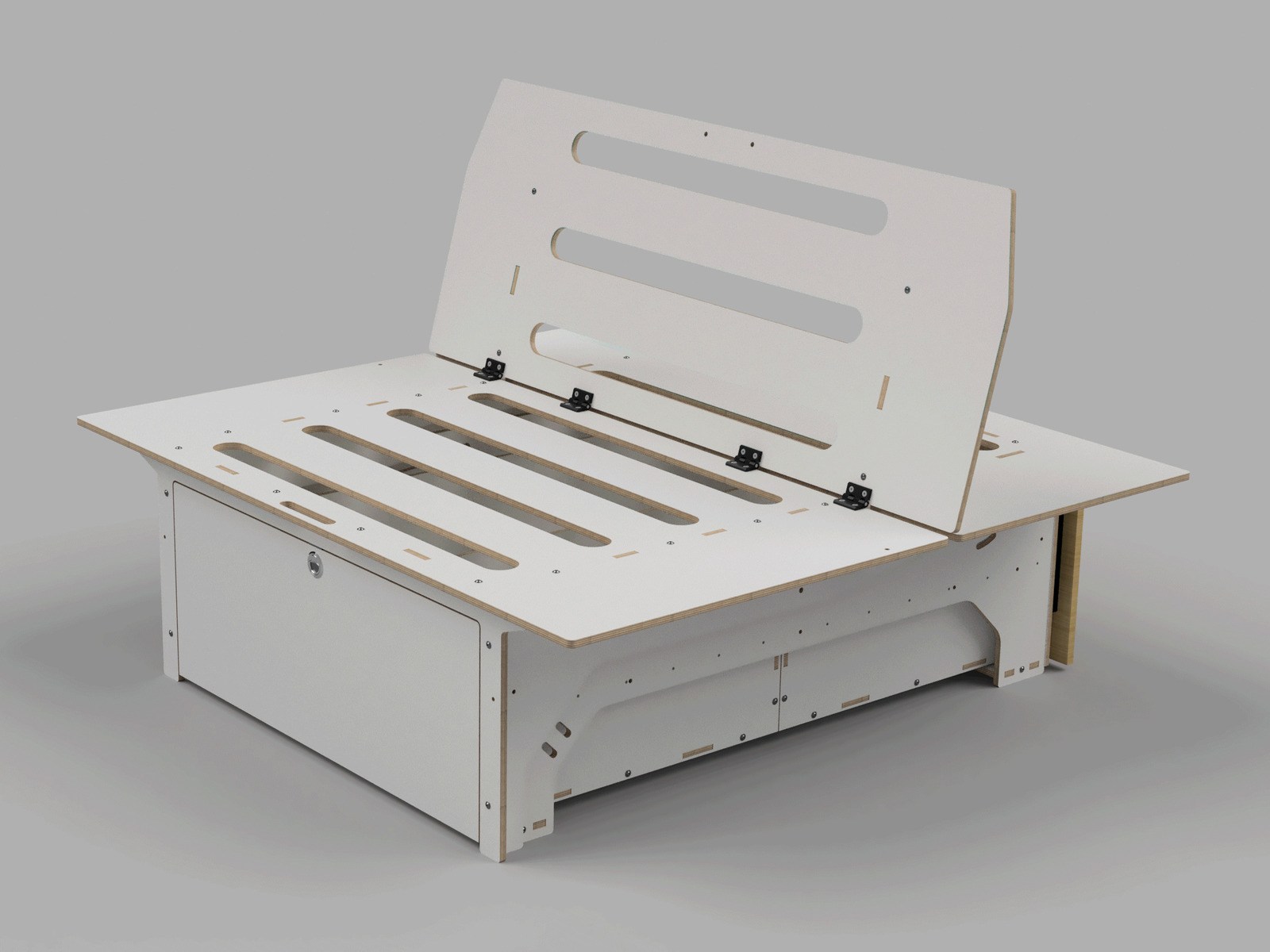
Many camping boxes use a continuous panel as a lying surface. This is cheap to manufacture, but has two major disadvantages: It lacks suspension and - more importantly - ventilation.
The rigid plate:
Although it saves valuable millimetres in the vehicle height, it offers no sleeping comfort. Without the spring effect, you will feel the hard surface much faster.
The slatted frame - our approach:
A slatted frame is the best insurance against mould and back pain. It allows air to circulate under the mattress, preventing condensation from collecting in the fabric. In our sleeping systems, the lying surface is therefore consistently designed as a slatted frame.
Forget the cheap camping mats or thin foam pads from the DIY store. If you sleep in the car for more than two nights at a time, you need proper cold foam.
Pay attention to the thickness when comparing: it should be 8 to 10 cm so that you don't land on the wood with your hips when turning over. A removable and washable cover is actually a must in everyday camping life, because things are bound to get dirty or dusty.
This is an issue that many beginners underestimate. Everyone loses fluid through their skin and breathing when they sleep. As the car cools down at night, condensation forms - exactly where your warm mattress lies on the cold surface.
If you don't have any ventilation, the mattress will start to mould or even mildew from underneath. This not only smells bad, but is also harmful to your health. It's better to invest a few euros more in a good mattress and under-ventilation. Nothing is worse than having to throw away your expensive foam after your holiday because it has turned black underneath.
Before you buy a camping box, you have to decide: Do you want a „customised suit“ for your current car or a „universal solution“ that you can perhaps also take with you in your next vehicle? Both have advantages and disadvantages that you should be aware of.
Universal boxes are designed to fit as many vehicle models as possible - from VW buses to high-roof estate cars. They are often cheaper because they are produced in large quantities.
The advantages:
The catch: They often do not make optimum use of the space in the boot. There are gaps at the sides (near the wheel arches), which you can use as storage space for small items, but which are often simply wasted space.
Some manufacturers build boxes that are tailored precisely to the contours of a specific model (e.g. VW Caddy, Berlingo or T6). These systems mould perfectly to the side walls.
The advantages:
The catch: If you change car model, the box usually no longer fits in the new vehicle. Resale is more difficult as you have to find someone who drives exactly the same car.
Pay particular attention to these three points:
Also check whether the box hits the seal or the loading sill when you pull it out (e.g. the cooking drawer). Some cars have a very high loading sill - the box may have to be raised at the bottom so that the drawers open at all.
If you plan to drive your car for a long time, go for a custom-fit system. If you want to remain flexible, the universal box is the safer choice - as long as you can live with the small gaps at the sides.
 Deutsch Deutsch
  English (UK)
 Français
 Nederlands
 Italiano
 Polski
 Español
 Čeština
 Dansk
Dansk